
Chapter 1 of 3
1: The World of Programming Around Us
Chapter 1: "What is Programming?"
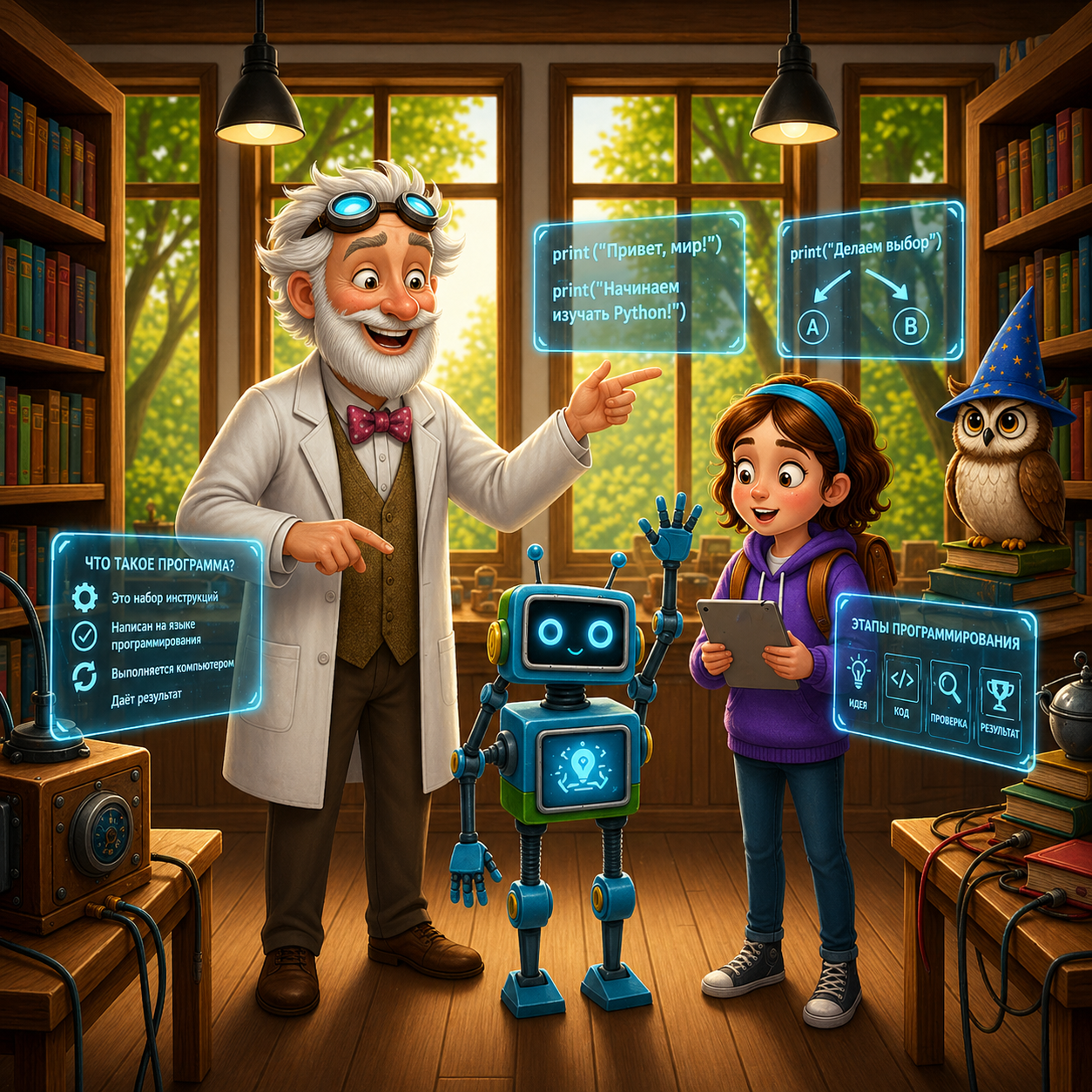
In a bright room with large windows, Alice was examining an amazing device on Professor Bit's desk.
– Professor, what is programming? – asked Alice, watching as Byte performs some tasks on the screen.
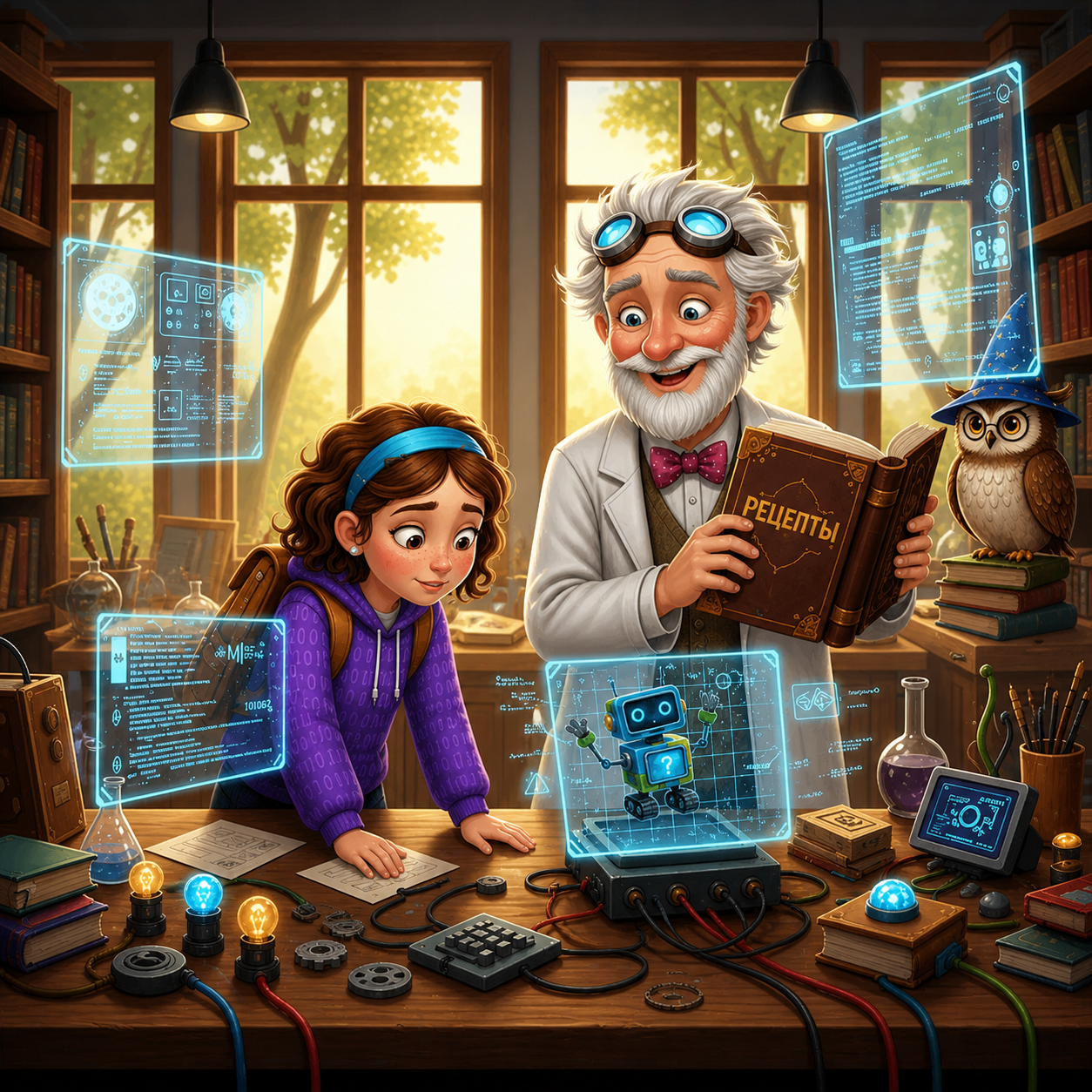
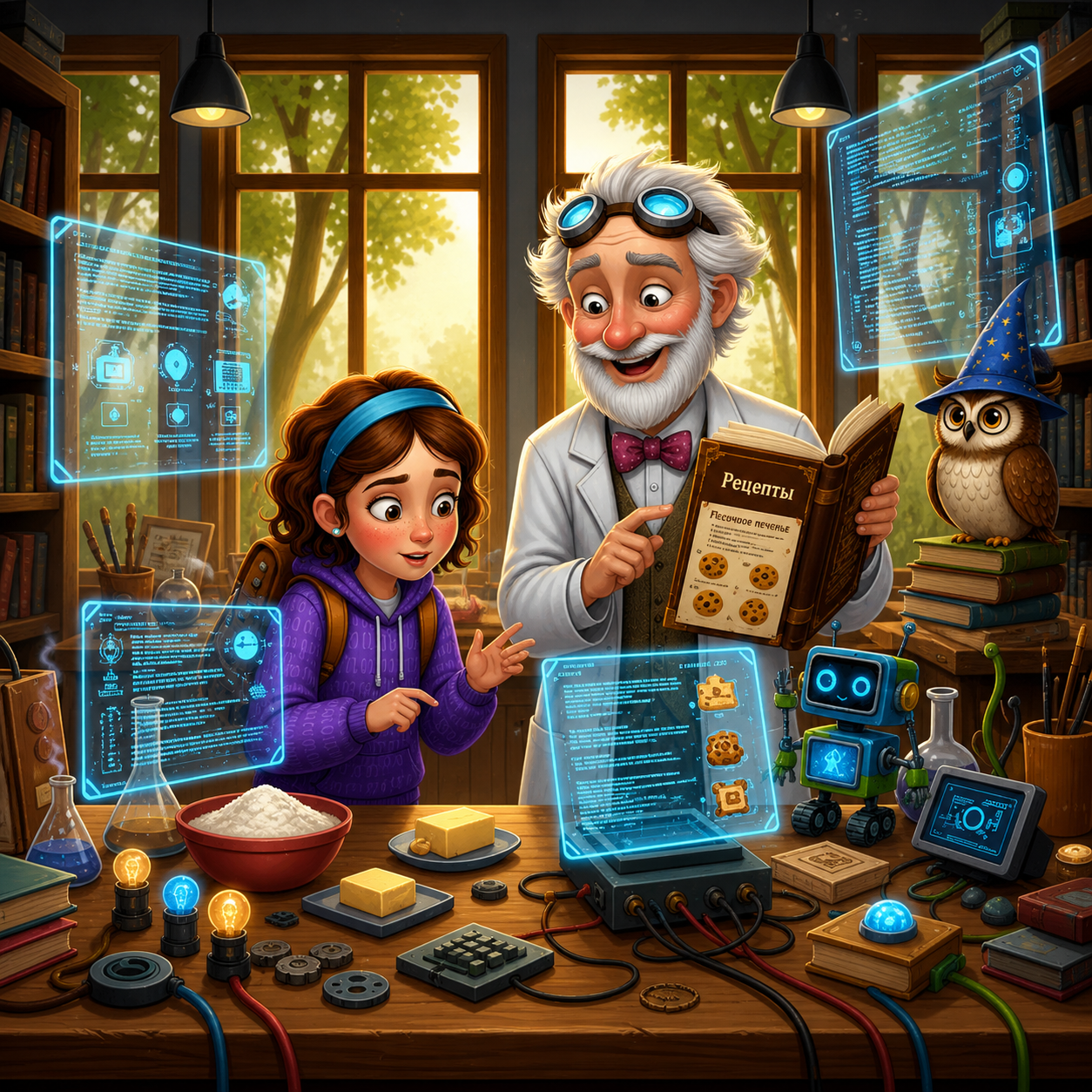
The Professor smiled and pulled a cookbook from the shelf:
– Imagine you want to bake cookies using a recipe. What do you need?
– Well, I need ingredients... and instructions on how to mix them, – Alice replied.
– Exactly! A recipe is a set of steps that need to be followed in a specific order. Programming is very similar to creating recipes, but instead of writing instructions for people, we write them for computers.
Byte jumped up:
– Master, I can show an example! Watch!
The robot stood in the middle of the room and froze.
– Byte, take 3 steps forward, – commanded the Professor.
Byte took exactly 3 steps.
– Now turn right and raise your left hand.
Byte followed the command precisely.
– You see, Alice, I gave Byte clear instructions, and he followed them. This is the foundation of programming – creating precise, step-by-step instructions that a computer can understand and execute.
Alice thought for a moment:
– So, when I play a video game, someone wrote instructions for everything that happens there? For every character movement? For every sound?
– Absolutely right! – nodded the Professor. – Programmers write instructions for everything a computer does – from simple calculators to complex games and robots.
– What language do they write these instructions in? – Alice wondered. – Computers don't understand Russian or English, do they?
Logic, who was sitting on a bookshelf, joined the conversation:
– Computers only understand numbers – zeros and ones. But it would be very difficult for people to write programs using only numbers, so special programming languages were created. They're similar to human languages, but have strict rules so the computer can understand them.
– For example, – continued the Professor, – instead of telling the computer: "Please, show the words 'Hello, world!' on the screen", we write a more structured command, like: print("Hello, world!"). This is an instruction in the Python programming language that tells the computer to display text on the screen.
Alice tried to imagine how a programmer works:
– So programmers are like writers who write instructions for computers?
– Great comparison! – praised the Professor. – Programmers are writers, engineers, and detectives all at once. They create instructions (code), assemble complex systems from them, and solve mysteries when something goes wrong.
Alice looked at Byte with new interest.
– Why is programming important? – she asked.
The Professor smiled broadly:
– Programming helps solve problems and create new things. Thanks to programmers, we have smartphones, the internet, video games, smart homes, and even spacecraft! But most importantly – programming teaches a special way of thinking, helping us see complex tasks as a series of simple steps. This skill is useful in any field, not just working with computers.
– I want to learn how to program! – Alice declared decisively.
– Excellent! – Professor Bit clapped his hands. – Our adventure is just beginning!
[TASK:](Chapter 1 What is Programming/TASK.md)
Another task from the book
Do this without the code editor: use a notebook or the box below. Read the instructions carefully — each chapter’s task is different.
Example of the first command: "Place the pencil on the paper."